

Everyone Is Learning AI. Here’s Why Some Software Engineers Are Learning PLCs Instead
CAREER PIVOT STRATEGY
Everyone Is Learning AI. Here’s Why Some Software Engineers Are Learning PLCs Instead.
An unfiltered, data-backed breakdown of why software developers are looking toward industrial automation—and what the transition actually looks like.
The tech internet is obsessed with artificial intelligence. Every week brings another model spitting out 500 lines of Python, generating full web interfaces from crude sketches, or automating routine backend code.
While half of tech Twitter argues over prompt engineering and coping with layoffs, a quiet subset of software engineers is making a completely different calculation: They are ditching pure screens for physical machinery.
This isn’t an irrational panic reaction. U.S. Bureau of Labor Statistics (BLS) data projects 15% growth for software developers from 2024 to 2034—adding nearly 288,000 jobs. Software engineering isn’t dying. But screen fatigue is real, global remote competition is fierce, and code generation at the basic web layer is rapidly commoditizing.

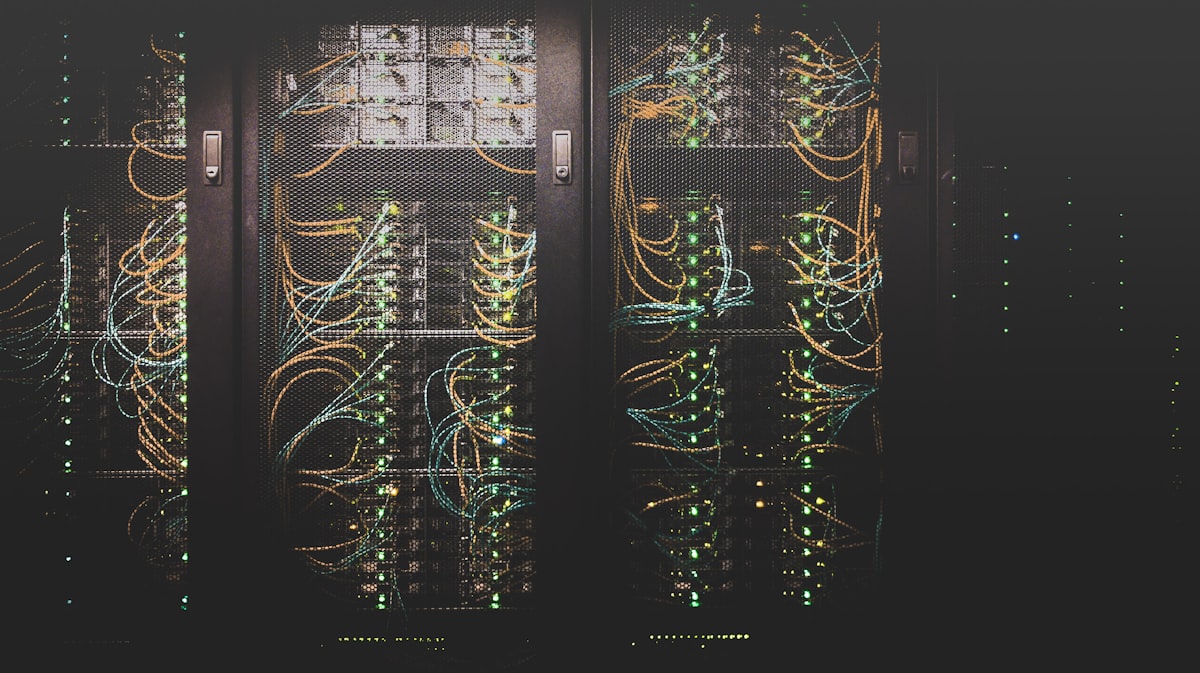
Inside an industrial control panel: Programmable Logic Controllers bridge raw electrical signals with automated system logic.
Enter PLCs (Programmable Logic Controllers)—the rugged industrial computers that run everything from automotive assembly lines to municipal water treatment plants and fulfillment centers.
Here is an unfiltered, data-backed breakdown of why software developers are looking toward industrial automation—and what the transition actually looks like.
Software Engineering vs. Industrial Automation
Before exploring why developers are pivoting, let’s look at the financial reality. Moving into industrial automation isn’t an automatic raise—it’s a career pivot with real trade-offs.
Step 2 · Career roadmap
See where this guide fits on the full career path
Every HandsOnPivot guide is one step of a tracked career plan. The roadmap sequences the skills, projects, and first-90-days milestones so you can see exactly what comes after this guide.
Open the career roadmap →Software Engineering vs. Industrial Automation
| Metric | Software Developers | Controls Engineers | Automation Techs |
|---|---|---|---|
| Median Annual Wage | $133,080 | $120,630 | $75,710 |
| Top 25% Earners | $169,000+ | $152,950+ | $95,000+ |
| 10-Year Growth | +15% (2024–2034) | +5% to +9% | +14% |
| Work Setting | Remote / Hybrid | Plant Floor / Field | On-Site Factory |
Data Source: U.S. Bureau of Labor Statistics (BLS) Occupational Employment Statistics.
Key Reasons to Consider PLC Programming
1. AI Can Write Syntax. It Can’t Test Hardware on a Live Line.
An LLM can generate algorithms in seconds. What an LLM cannot do is stand in front of a stalled packaging line with a digital multimeter, test whether a 24VDC sensor lost power, or manually verify that a safety interlock works before restarting a machine.

Physical Verification: Hardware testing requires hands-on electrical diagnosis that AI cannot replicate on an active manufacturing line.
Industrial automation connects code to physical reality. The software logic is only part of the equation—the rest is understanding how electricity, sensors, pneumatic valves, and safety circuits interact under chaotic real-world conditions.
2. Your Brain Is Already Trained for Systematic Debugging
If you’ve spent three hours tracking down a race condition in a web application or an unhandled exception in an API, your cognitive habits carry over directly.
In PLC programming, the primary languages—such as Ladder Logic or Structured Text (defined under the IEC 61131-3 standard)—look visually different, but the problem-solving loop is identical:
You aren’t learning how to think like a problem solver from scratch; you’re applying that mindset to a physical medium.
3. The Physical Feedback Loop Is Instant and Tangible
In web development, your daily work often exists as an abstract UI tweak or a backend database query.

Tangible Engineering: Seeing code directly execute movement through high-precision robotics creates immediate feedback.
In a plant, you write logic, download it to the controller, and watch a 6-axis robot arm pivot, pick up a component, and execute a weld sequence. Seeing code directly manipulate heavy equipment provides a level of immediate, tangible feedback that pure screen work rarely matches.
4. The “Silver Tsunami” Is Creating a Real Talent Deficit
According to the Deloitte & The Manufacturing Institute Talent Study, the U.S. manufacturing sector could need up to 3.8 million jobs between 2024 and 2033. However, the report warns that up to 1.9 million of those jobs could remain unfilled if the current talent shortage continues.
THE INDUSTRIAL TALENT GAP (2024–2033)
1.9 Million Projected Unfilled Technical Roles
Driven by retiring veteran controls engineers and electrical technicians.
Veteran controls engineers and electrical technicians are retiring at record rates, creating demand for technically adept practitioners who can step in.
5. High Barriers to Entry Create Career Moats
You cannot complete a 12-week online bootcamp and immediately take charge of a high-voltage industrial installation. Because automation involves high-voltage power, regulatory compliance, and physical safety risks, employers value deep technical competence. That barrier protects practitioners from the rapid labor oversaturation currently impacting entry-level web development.
6. The “Hybrid IT/OT” Advantage
Modern industrial facilities are working to connect factory-floor machinery (Operational Technology – OT) with enterprise cloud infrastructure (Information Technology – IT). Software developers who understand PLC protocols, MQTT, SQL, and Python hold an uncommon advantage in industrial automation.
(Python, SQL, APIs) + OT SKILLS
(PLCs, Ladder, Sensors)
Bridging IT and OT: Modern plants require network infrastructure that connects shop floor PLCs to cloud analytics.
7. Localized Demand Shielded from Pure Remote Outsourcing
Web and cloud software roles often put developers in competition with global remote talent pools. PLC programming is closely tied to physical infrastructure. Facilities in Ohio, Texas, Germany, or Ontario need engineers who can physically show up on-site during commissioning and maintenance phases. The labor market is localized rather than fully globalized.
8. Anchored in Essential Infrastructure
SaaS startups can disappear when capital markets contract. Industrial automation powers the physical economy:
- 🚰 Water and wastewater treatment plants
- ⚡ Electrical power grids and renewable energy storage
- 📦 Distribution and fulfillment centers
- 💊 Pharmaceutical manufacturing
- 🥩 Food processing facilities
These physical installations must be built, maintained, and upgraded regardless of digital market cycles.
9. You Can Test the Waters for Free (or Very Low Cost)
You don’t need expensive hardware to start learning industrial logic:
- CODESYS: Download this industry-standard development environment for free; it includes a fully functional virtual soft-PLC simulator.
- Ignition Maker Edition: A free-for-personal-use SCADA platform used to build industrial human-machine interfaces (HMIs).
- Arduino Opta or Siemens LOGO!: Entry-level micro-PLCs (under $150) that allow you to practice wiring low-voltage inputs and outputs at home.
10. It’s a Skill Addition, Not a Career Reset
Pivoting into controls isn’t abandoning your software experience; it’s stacking skills. Combining software engineering with hardware logic, industrial networking, and safety systems creates a career profile spanning robotics, field engineering, and industrial cybersecurity.
🧭 HANDSONPIVOT REALITY CHECK
Initial Salary Adjustment: Mid/Senior developers moving to entry controls roles may take an initial 15–25% pay reduction while developing electrical fundamentals.
Electrical Knowledge Required: Reading 3-phase schematics, understanding relays, and managing 24VDC control circuits are mandatory skills.
On-Site Commitment: Panel wiring, testing, and field commissioning require physical presence in industrial environments.
The 30-Day PLC Exploration Plan
If you want to test whether industrial automation aligns with your interests before making career changes, try this 4-week self-guided plan:
Week 1: Electrical Fundamentals
Study basic DC/AC circuit theory, Ohm’s law, sinking vs. sourcing sensors, relays, and industrial electrical symbols.
Week 2: Basic Ladder Logic
Download CODESYS (Free) or Rockwell’s Connected Components Workbench. Build a simulated motor start/stop circuit with seal-in logic, timers, and counters.
Week 3: HMIs & SCADA Systems
Install Ignition Maker Edition (Free). Connect it to your simulated PLC and build an operator interface with start/stop switches, real-time status indicators, and fault displays.
Week 4: Evaluate Your Interest
Ask yourself: Did I enjoy configuring real-time logical states and visual interfaces as much as or more than my usual software tasks?
Ready to Explore the Industrial Pivot?
Take our quick interactive career quiz to match your existing software background with hands-on industrial tracks.
Step 3 · Salary & market data
What does this career really pay in 2026?
Pay decisions need data, not vibes. The comparison page breaks down medians, ceilings, overtime math, and which industries pay the most - across every hands-on career on this site.
See the 2026 pay data →Step 4 · Fast-track training
Shorten the ramp with structured training
A guided bootcamp compresses months of self-study into a focused program with real lab reps and projects you can defend in an interview.
Start the PLC Programming Bootcamp →Step 5 · Free field kit
Download the 90-Day PLC Pivot Roadmap & Field Kit Checklist
A printable 90-day plan with weekly goals, plus the tool and drill checklist field techs use to stay job-ready - sent straight to your inbox.
✓ Check your inbox - the checklist is on its way.
No spam, ever. We only use your address to send the checklist and automation career updates.